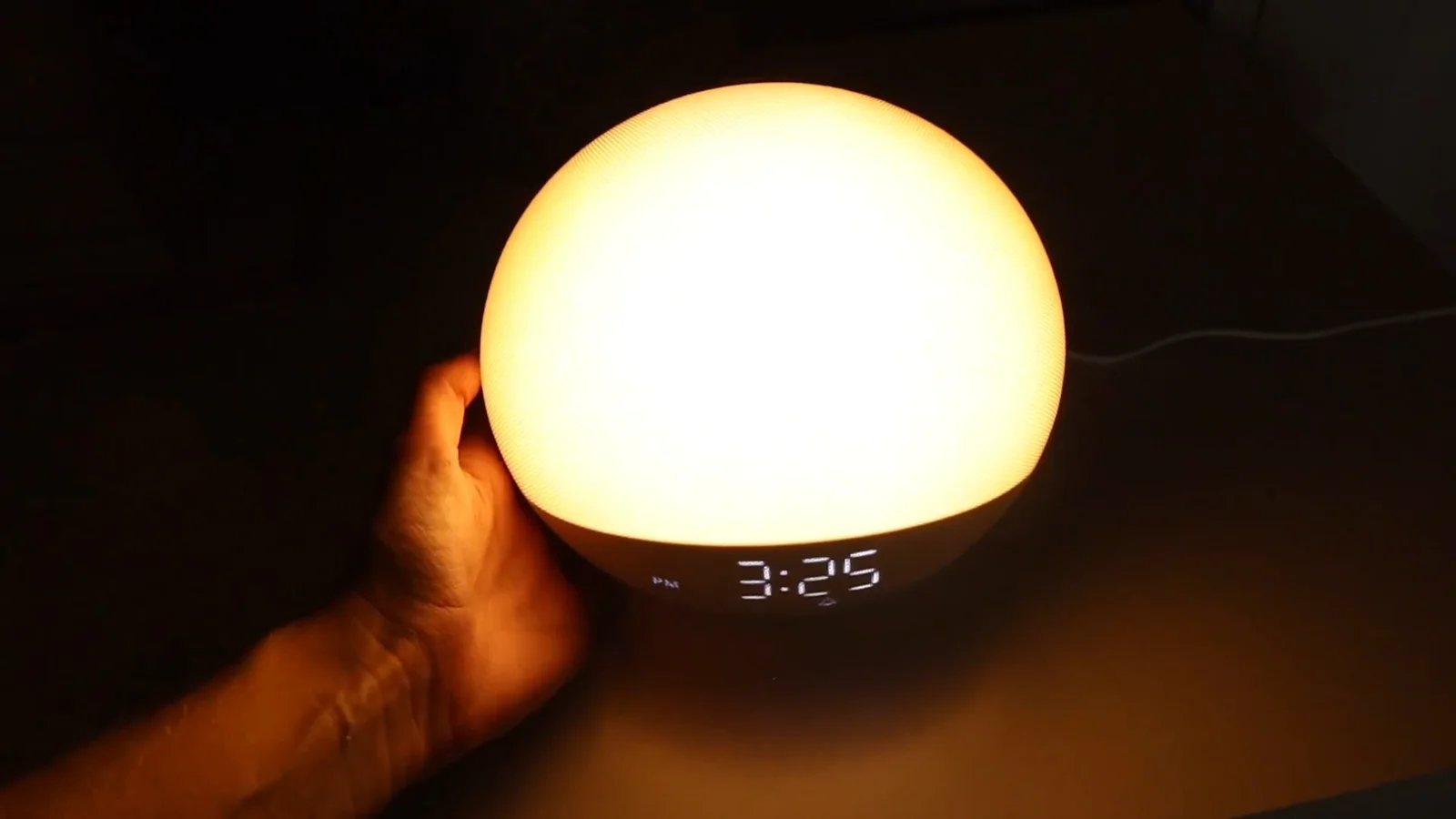
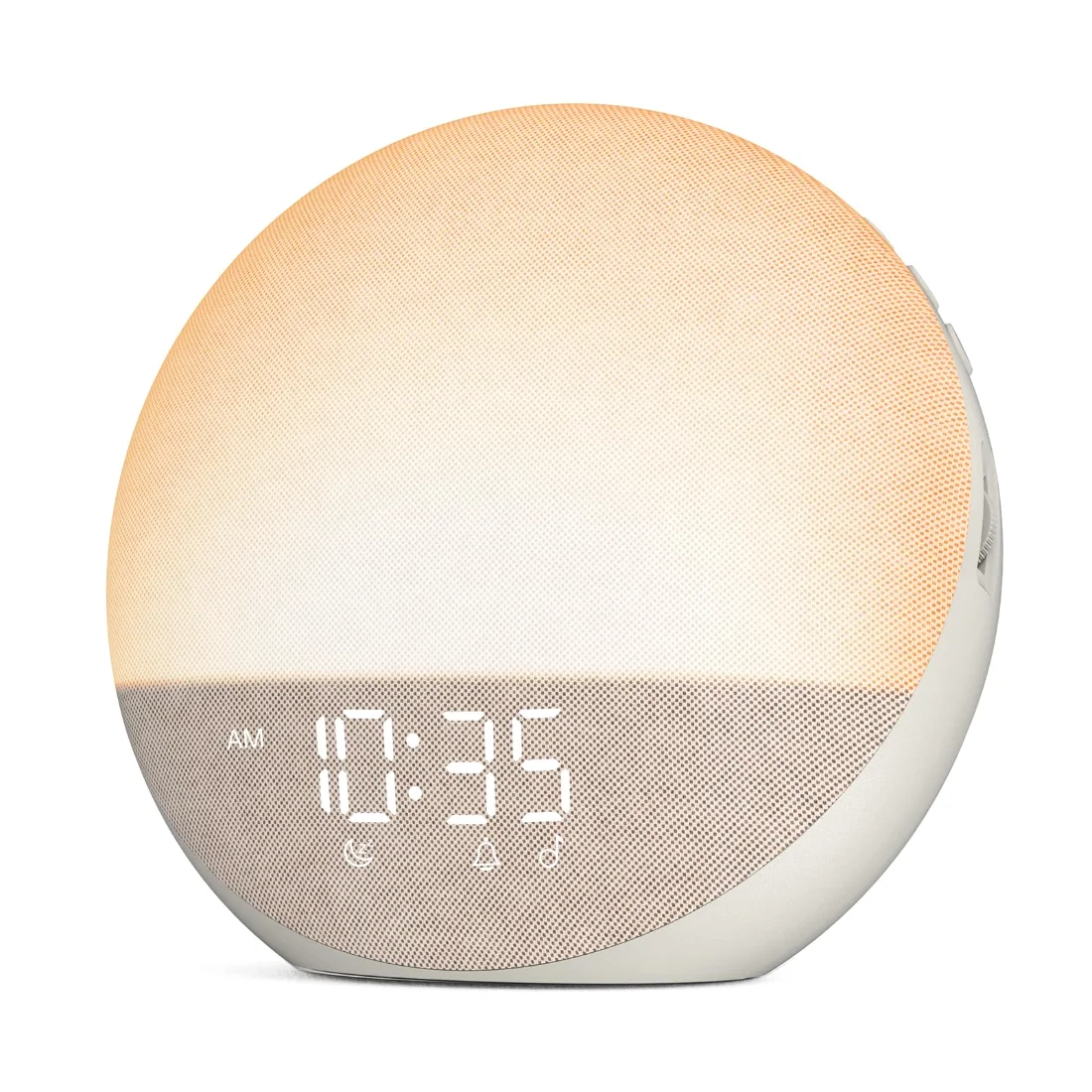
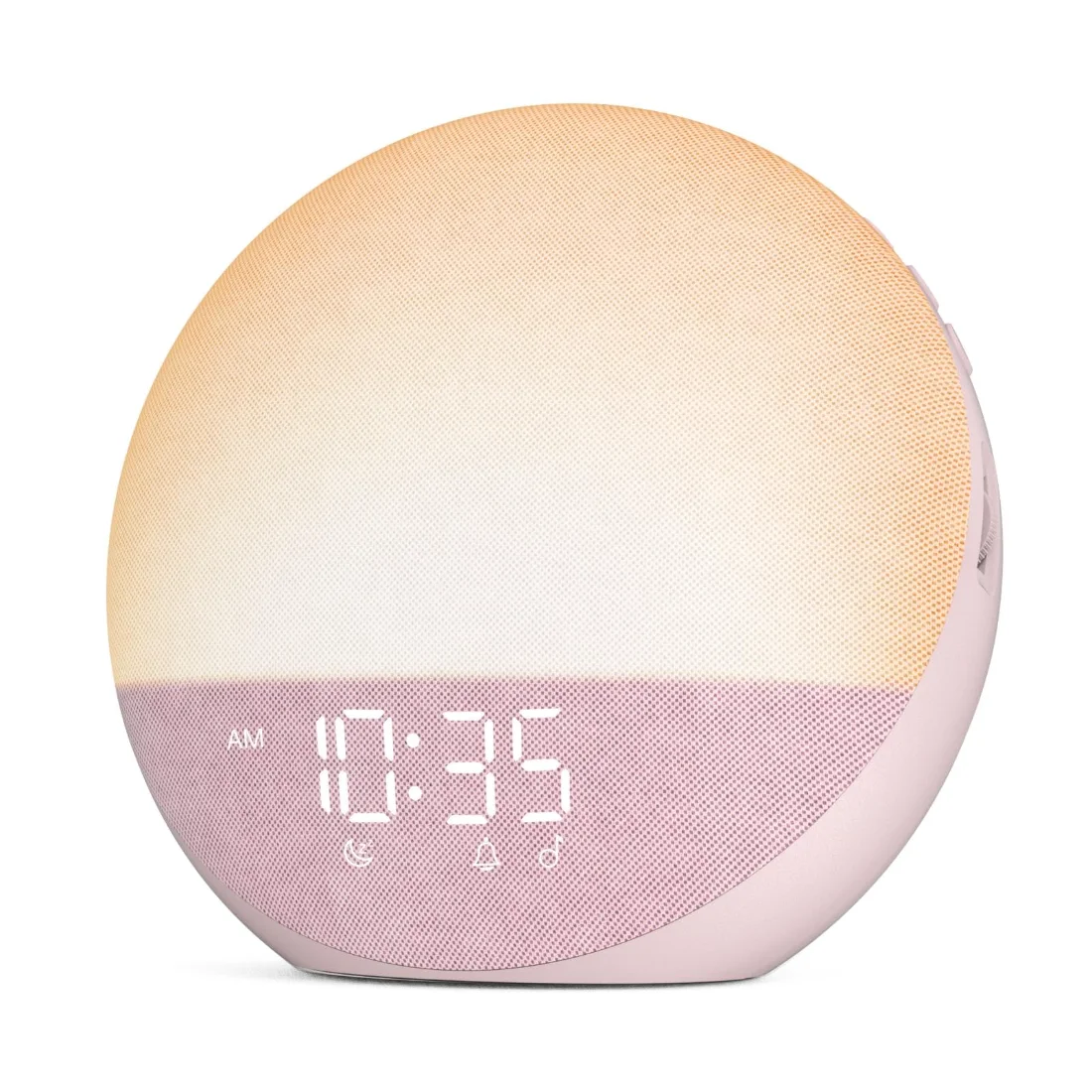
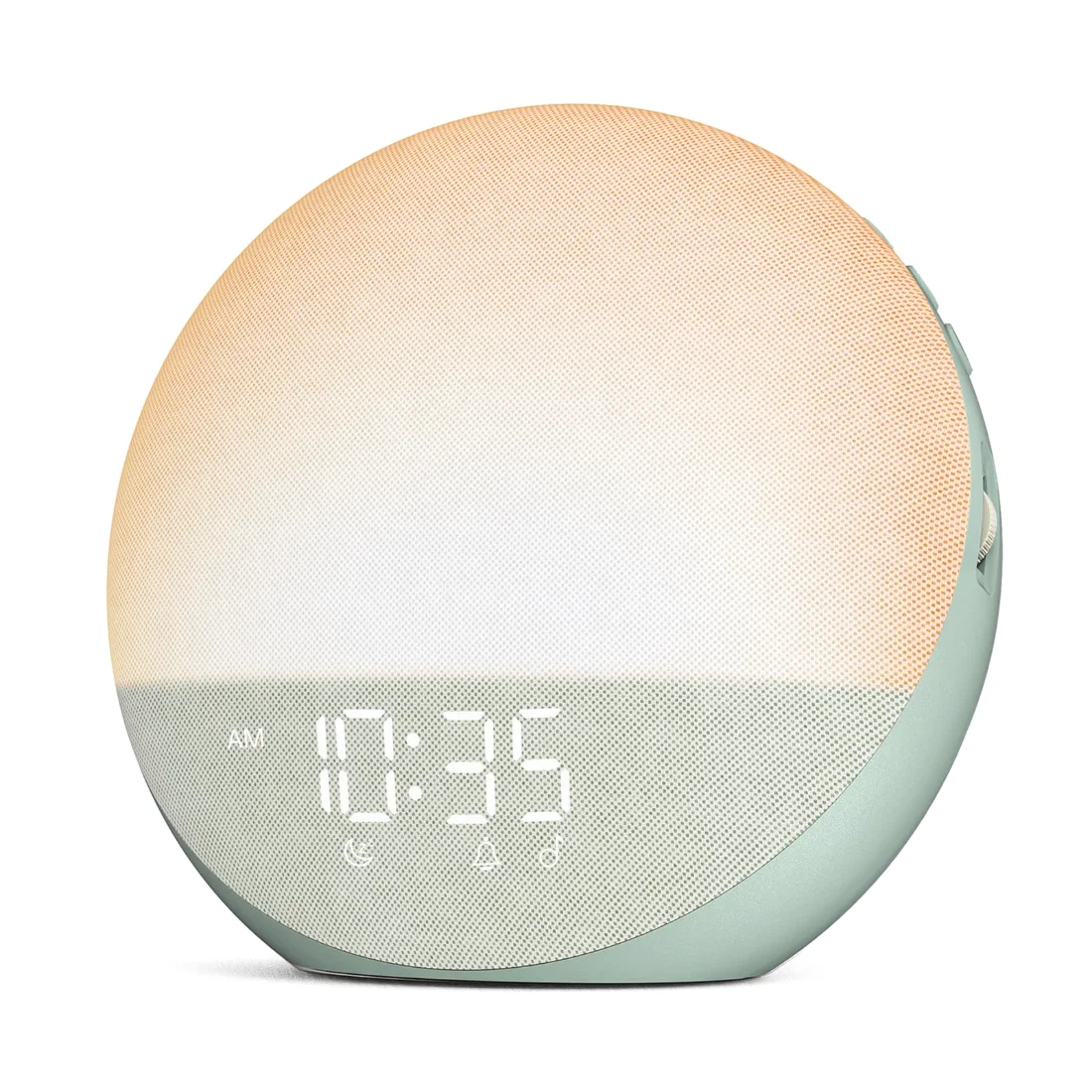
The H03. A dome that starts glowing up to an hour before the alarm and climbs the whole way, with twenty-five sleep sounds, Bluetooth, twelve night-light colours and a display dimmer that reaches zero. Five colourways.
The light starts between five and sixty minutes before the alarm and climbs the whole way, and you choose how long.
Three wake modes: light and sound together, sound alone, or light alone with nothing audible at all.
Twenty-five sleep sounds and a sleep timer, plus Bluetooth for anything the list does not cover.
Twelve night-light colours, a sunset setting, and a display dimmer that runs from 100% to off.
$59.994.4(1,955)
H03
H03 Sunrise Wake-Up Light, Cocoa
Cocoa
Sunrise 5–60 min25 sleep soundsBluetooth
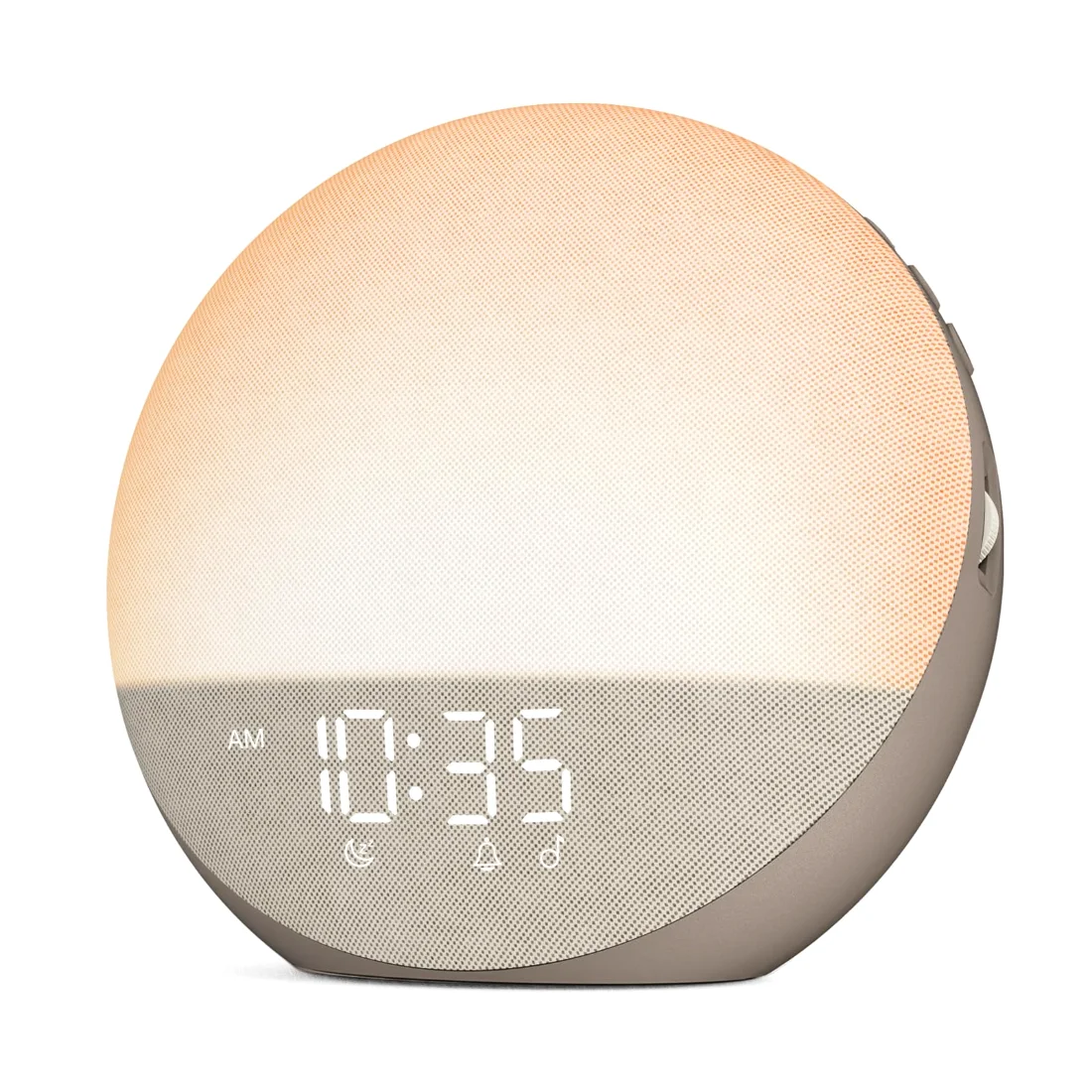
Cocoa is the darkest shell in the line. In an unlit room the base disappears and only the dome is visible.
$59.994.4(1,955)
H03
H03 Sunrise Wake-Up Light, Frost White
Frost White
Sunrise 5–60 min25 sleep soundsBluetooth
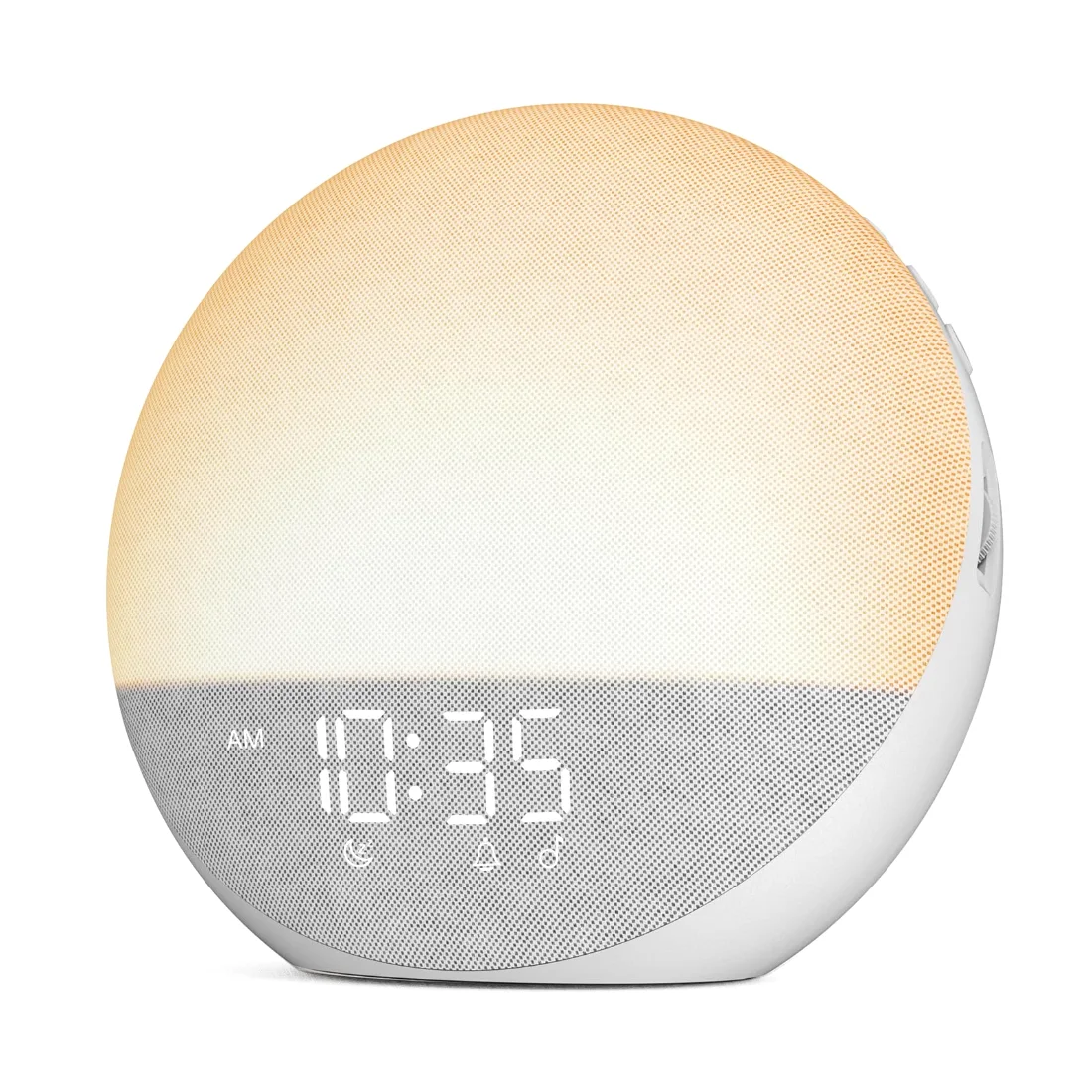
Frost white takes the sunrise glow cleanly, so the dome reads as light rather than as a lit object.
$59.994.4(1,955)
H03
H03 Sunrise Wake-Up Light, Sakura Pink
Sakura Pink
Sunrise 5–60 min25 sleep soundsBluetooth
Sakura pink under a white dome, our softest H03, and the one most often bought for a room that has to feel calm.
$59.994.4(1,955)
H03
H03 Sunrise Wake-Up Light, Sage Green
Sage Green
Sunrise 5–60 min25 sleep soundsBluetooth
Sage green: the H03 for bedrooms built out of greens and linens rather than greys.
$59.994.4(1,955)
Light first, sound second, or no sound at all
A sunrise light is a lamp on a long, slow timer. You set how early it starts, anywhere from five to sixty minutes before the alarm, and it climbs from dark to full over that whole window. There are three wake modes: light and sound together, sound alone if the light is not for you, and light alone with nothing audible at all. The third is the one people are usually surprised by, and the one that changes a household where two people wake at different times.
The evening half
The H03 does as much work at night as it does in the morning. Twenty-five sounds cover the noise colours, white, pink, brown and blue, plus rain, waves and the rest, and a sleep timer stops them on their own. Twelve night-light colours, each dimmable, and a sunset setting that fades down instead of switching off. Bluetooth covers anything the built-in list does not.
Size and power
Seven inches across, about 3.8 deep, under two pounds. It runs from a 5V 2A adapter, and if that adapter ever fails, the exact replacement is a nineteen-dollar part rather than a new clock. There is a backup battery compartment so the alarm survives a power cut.
What it is and is not
It is a lamp on a timer, and a pleasant way to wake up. It is not a medical device and it treats nothing. If your mornings are hard in a way that a nicer alarm will not fix, that belongs with a clinician.
The H03 is the only clock we make that does most of its work before it makes a sound. If that is not the problem you are solving, the other four lines on the front page of the Odokee range probably are, and the guide to light and waking is the one to read first.
Not medical advice. Sunrise lights and sound machines are consumer products, not treatments. Nothing here is medical advice; if sleep is a persistent problem, speak to a clinician.